
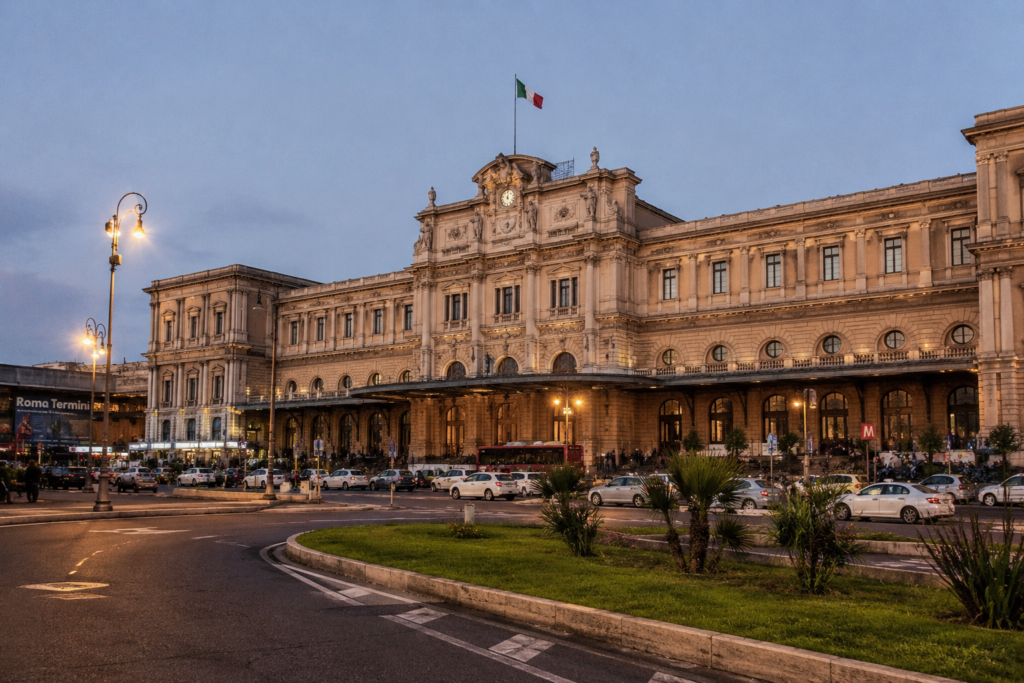
After exploring Amsterdam, Berlin, Prague, and Venice, you’ve finally arrived in Rome—the last destination in our Europe by Train series.
Rome blends thousands of years of history with modern Italian culture. Ancient landmarks stand beside lively cafés, family-run restaurants, and bustling piazzas, making every walk through the city feel like stepping through history.
Whether you’re spending two days or a full week, Rome offers unforgettable architecture, world-famous cuisine, and countless places to explore.
Quick Overview
Country: Italy
Currency: Euro (€)
Language: Italian
Best Time to Visit: April–June and September–October
Recommended Stay: 3–4 Days
Top Attractions in Rome
The Colosseum
One of the world’s most recognizable landmarks, the Colosseum once hosted gladiator contests and large public events. Today, visitors can walk through the ancient amphitheater while learning about the history of the Roman Empire.
Allow: 2–3 hours
Roman Forum
Located next to the Colosseum, the Roman Forum was the center of political, religious, and commercial life in ancient Rome.
Palatine Hill
According to legend, this is where Rome was founded. The hill offers impressive ruins and beautiful panoramic views of the city.
Trevi Fountain
No visit to Rome feels complete without stopping at the Trevi Fountain.
Many visitors toss a coin into the fountain while making a wish to return to Rome someday.
Pantheon
Built nearly 2,000 years ago, the Pantheon remains one of the best-preserved buildings from Ancient Rome.
Its massive dome continues to amaze architects and visitors alike.
Piazza Navona
A lively square filled with cafés, artists, fountains, and street performers.
It’s a wonderful place to relax after sightseeing.
Vatican City
Although technically an independent country, Vatican City is located within Rome and is home to:
- St. Peter’s Basilica
- Vatican Museums
- Sistine Chapel
Many travelers dedicate an entire day to exploring this area.
What to Eat in Rome
Italian food varies by region, and Rome has several local specialties worth trying.
Carbonara
A creamy pasta made with eggs, Pecorino Romano cheese, guanciale, and black pepper.
Cacio e Pepe
A simple yet flavorful pasta featuring Pecorino Romano cheese and freshly ground pepper.
Amatriciana
A traditional Roman pasta made with tomato sauce and guanciale.
Roman Pizza
Typically thinner and crispier than many other styles of pizza.
Gelato
Perfect for cooling off while exploring the city.
Espresso
Romans often enjoy a quick espresso while standing at a café before continuing their day.
Where to Stay
Historic Center
Perfect for first-time visitors wanting to walk to many attractions.
Best For
- Sightseeing
- Couples
- Short stays
Trastevere
Known for charming streets, restaurants, and nightlife.
Best For
- Food lovers
- Evening entertainment
- Local atmosphere
Termini Station Area
Convenient for train travelers arriving from Venice or continuing to other destinations.
Best For
- Budget travelers
- Easy transportation
- Short visits
Vatican Area
Quieter than the city center and close to major religious attractions.
Estimated Travel Costs
Budget Traveler
- Hotel: €70–120
- Food: €20–35
- Transportation: €8–15
- Attractions: €20–40
Estimated Daily Total: €120–200
Mid-Range Traveler
- Hotel: €150–250
- Food: €40–70
- Transportation: €10–20
- Attractions: €40–70
Estimated Daily Total: €250–400
Luxury Traveler
Expect €500+ per day, depending on accommodations and dining.
Getting Around Rome
Walking is often the best way to explore the historic center.
For longer distances, Rome offers:
- Metro
- Buses
- Trams
- Taxis
- Ride-share services
Comfortable walking shoes are highly recommended, as many streets are paved with historic cobblestones.
Helpful Travel Tips
- Purchase attraction tickets in advance during peak season.
- Carry a reusable water bottle and refill it at Rome’s public drinking fountains.
- Dress respectfully when visiting churches and religious sites.
- Be aware of pickpockets in crowded tourist areas.
- Start sightseeing early to avoid the largest crowds.
Is Rome Worth Visiting?
Absolutely.
Rome combines remarkable history, outstanding food, beautiful architecture, and vibrant street life into one unforgettable destination. Whether you’re fascinated by ancient civilizations, Italian cuisine, or simply enjoying life in outdoor cafés, Rome offers something for nearly every traveler.
As the final stop in our Europe by Train journey, Rome provides a memorable ending to an incredible adventure across Europe.
Final Thoughts
Our Europe by Train series has taken us through five unforgettable destinations:
- Amsterdam
- Berlin
- Prague
- Venice
- Rome
Each city offers its own history, culture, cuisine, and experiences, proving that traveling across Europe by rail is one of the most rewarding ways to explore the continent.
We hope this series helps you plan your own European adventure and inspires future journeys wherever your travels take you.
Suggested Related Articles